
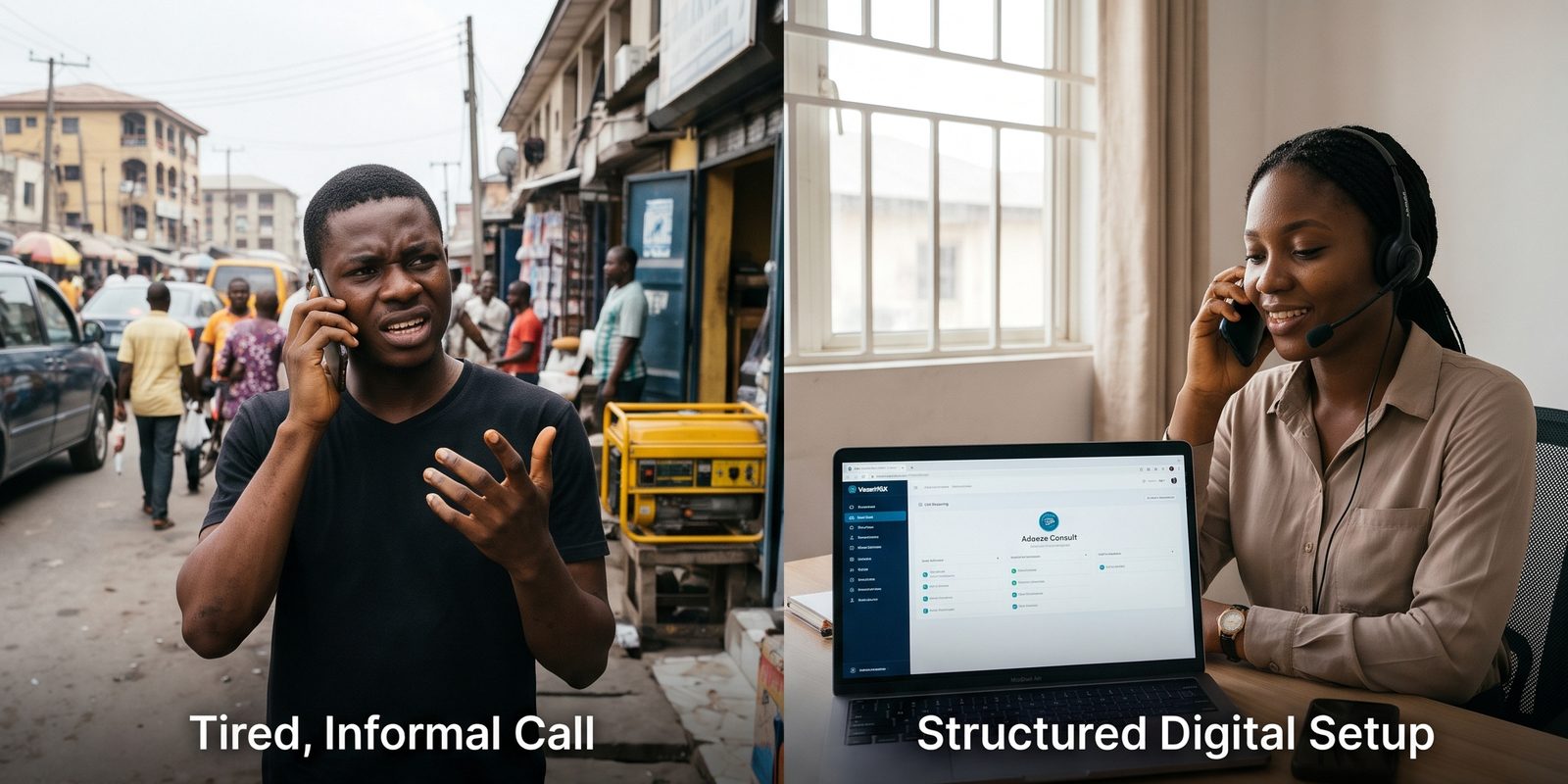
Picture two phone calls. In the first, a potential client dials a number and hears a tired "Hello... hello, who's this?" with market noise or a generator rumbling in the background. In the second, the same client hears a calm, recorded greeting: "Thank you for calling Adaeze Consult. Press 1 for sales, press 2 for support." Same business size. Same budget, maybe. But one of them just sounded like a company that's going somewhere.
For Nigerian entrepreneurs and small business owners, this gap between "how big we actually are" and "how big we sound" is one of the cheapest competitive advantages available — and one of the most overlooked. You don't need a call centre floor or a corporate office to project professionalism. You need a handful of deliberate choices about how your business answers the phone, and most of them cost far less than people assume.
Why the phone still decides first impressions
Even in a world of WhatsApp catalogues, Instagram DMs, and website contact forms, the phone call remains the moment many Nigerian customers decide whether they're dealing with a serious operation. It's where trust gets tested in real time: can this business be reached, does someone answer promptly, do they sound organized? A buyer comparing two vendors — one a registered company, one a one-person hustle — often can't tell the difference from a logo or a product photo alone. The phone call is where that difference quietly reveals itself, for better or worse.
This matters even more in sectors where trust is the product itself — financial services, logistics, healthcare, professional services — where a customer parting with money or sensitive information wants reassurance that someone, and ideally some organization, is accountable on the other end.
The cheapest upgrade: stop using your personal line
The single most common professionalism gap in small Nigerian businesses is simple: the business runs entirely on the owner's personal GSM number. It works, until it doesn't. The owner is unreachable in a meeting, the number gets saved in a customer's phone under a first name instead of the business name, and if that SIM is ever lost, swapped, or the owner moves on, years of customer relationships can vanish with it.
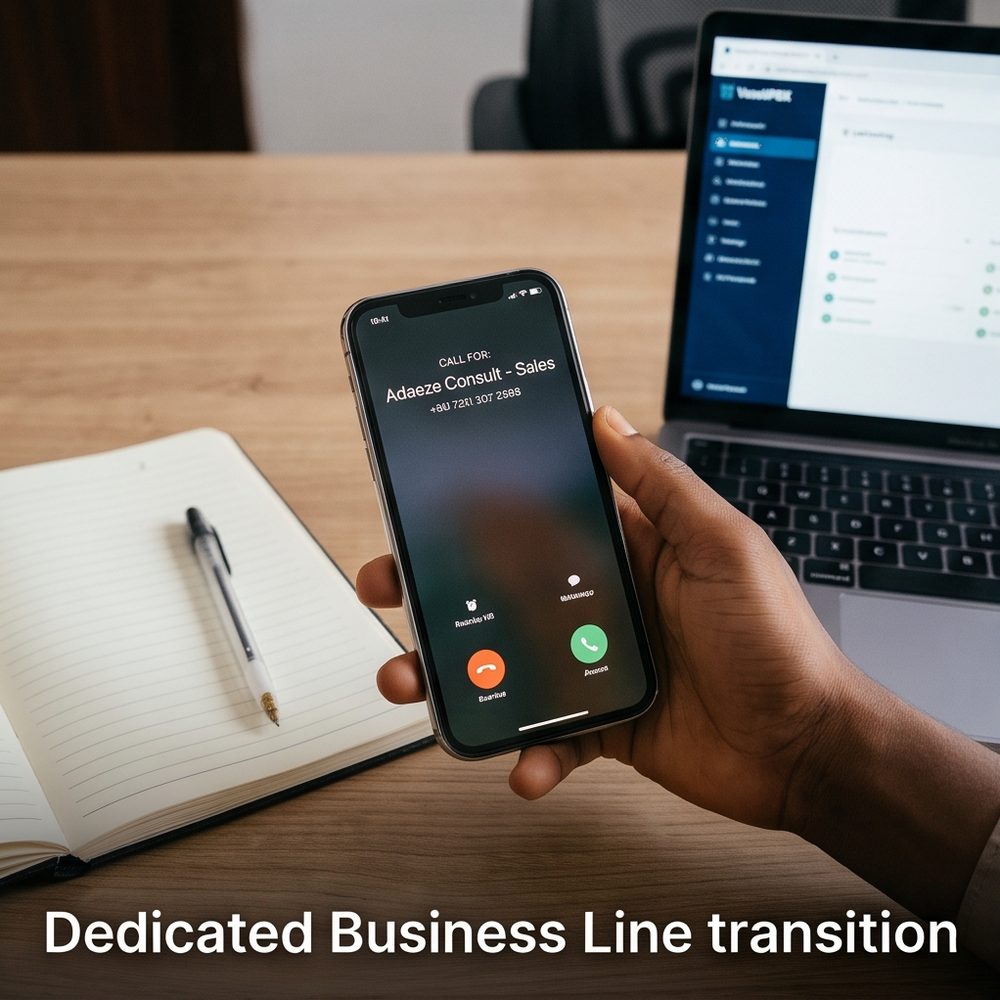
A dedicated business number — one that rings on your mobile phone rather than tying you to a single SIM — is now affordable even for solo founders and micro-businesses. It separates "the business" from "the person," which matters for two reasons: customers remember and trust a business identity more than an individual's mobile number, and the business itself becomes less fragile, because the number doesn't leave when a staff member does.
A little automation goes a long way
A short, well-recorded greeting and a simple menu — "Press 1 for new orders, press 2 for existing customers, press 3 to speak with support" — can make a two-person operation sound like it has departments. It costs little to set up, yet it does real work: it routes callers to the right person faster, it sounds consistent every single time (no bad days, no background noise), and it buys you a few seconds of credibility before a human ever says a word.
The same applies to voicemail and after-hours messages. "We're currently closed; our business hours are Monday to Saturday, 8am to 6pm; please leave a message or try again during these hours" tells a caller your business runs on structure, not whenever the owner happens to be free. Time-of-day call routing — sending calls to a different line or message outside business hours — is another small feature that quietly signals discipline.
Consistency beats flash
It's tempting to think "sounding big" means sounding like a bank or a telecom giant, with elaborate hold music and multiple transfers. In practice, Nigerian customers — and international ones — respond more to reliability than to grandeur. A business that answers promptly, routes calls sensibly, and follows up consistently will out-perform a flashier competitor who occasionally goes silent for days.
This is also where a professional image pays for itself in retention, not just first impressions. A customer who calls back three months later and hears the same organized greeting, reaches the same easy routing, and gets handled the same way builds confidence that this is a business built to last — not a one-off transaction.
Growing into the image you've already built
Here's the useful part: none of these choices lock you in or force you to overspend ahead of your actual size. A dedicated number with a greeting and simple routing is something a solo founder can set up in a day. As the business adds staff, that same setup can grow — more extensions, call queues when volume increases, reporting on missed calls, eventually a full contact centre if the business scales into one. You're not throwing away what you built; you're building on it.

This is really the broader point behind modern business communications tools: they meet you wherever you currently are. Whether you're still running things from a personal line today, already have a small office PBX, or are ready to add structure before you've "earned" it in the traditional sense, a cloud-based system like VezetiPBX lets a lean team sound organized from day one, while VezetiPhone keeps that same professional number reachable on the move. And if the business eventually needs dedicated agents handling high call volumes, that same foundation extends naturally into a contact centre setup like VezetiCC — without having to rip out and replace what came before.
Sounding professional isn't about pretending to be bigger than you are. It's about making sure the business a customer meets on the phone is as serious, organized, and dependable as the one you're actually building behind the scenes.
This post is part of an ongoing weekly series on telecom, business growth, and digital transformation for Nigerian businesses.
💬 Questions & Comments
Loading comments…
Leave a comment