

Every business owner has lived through some version of this moment: the power goes out, the office internet drops with it, and for the next few hours your phone simply stops ringing — or rings and nobody can answer it. Customers assume you've closed, orders go to whoever picks up first, and by the time the lines are back, you're not sure how much business quietly walked away while you were unreachable.
Most businesses have a plan for what happens if a delivery van breaks down or a key supplier goes quiet. Far fewer have ever sat down and asked a simpler, more uncomfortable question: what exactly happens to our phone system when something goes wrong — and what's actually our plan for that day?
Why phone systems fail more often than they should
A phone system usually isn't brought down by one dramatic event. It's brought down by a handful of familiar, mundane weak points stacking up.
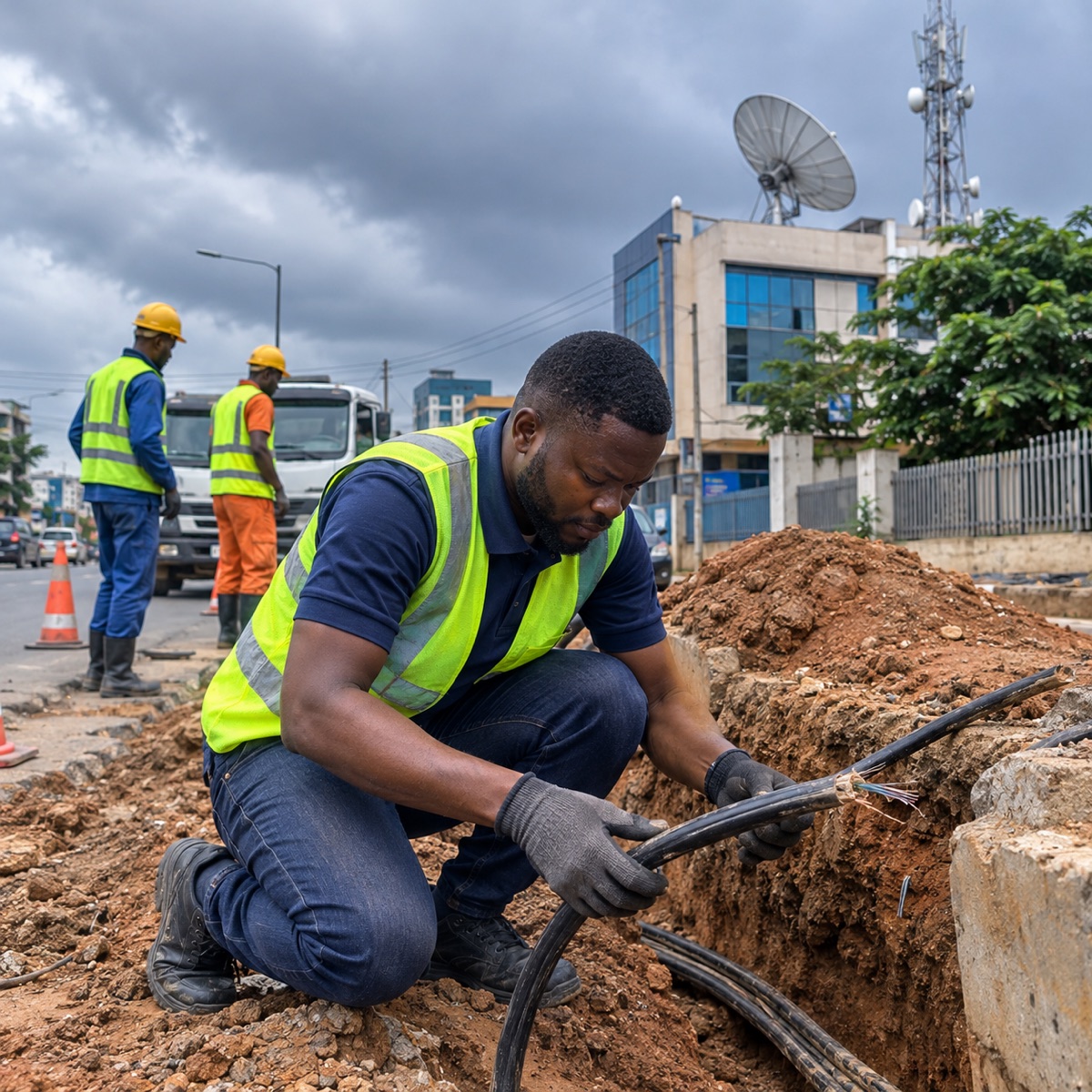
Power is the most obvious one. A traditional phone cabinet (a PABX) sitting in a back office needs mains power to run, and when NEPA — or whatever name your generation calls it by — takes the area down and the backup battery or generator doesn't cover the gap, the phones go silent along with everything else.
Physical lines are the second. Whether your PRI line or internet connection arrives by buried cable or by a microwave radio link on the roof, both are vulnerable to the ordinary chaos of Nigerian infrastructure — a road construction crew that doesn't check for cables first, vandalism, or a storm that knocks a dish out of alignment.
Internet dependency is the third, and it's a newer one. As more businesses move toward SIP trunking and cloud-based systems, call quality and uptime become tied to a connection that can itself be unreliable, particularly outside the main commercial centres.
And finally, there's the single point of failure baked into the hardware itself: a single on-premise box handling every call for a single location means that if that one box — or that one site — goes down, so does the entire business's ability to be reached by phone, no matter how many staff are sitting ready to answer.
What "continuity" actually means for a phone system
Continuity doesn't mean guaranteeing nothing will ever go wrong — nothing can promise that. It means making sure that when something does go wrong, the business doesn't go silent while it gets fixed.
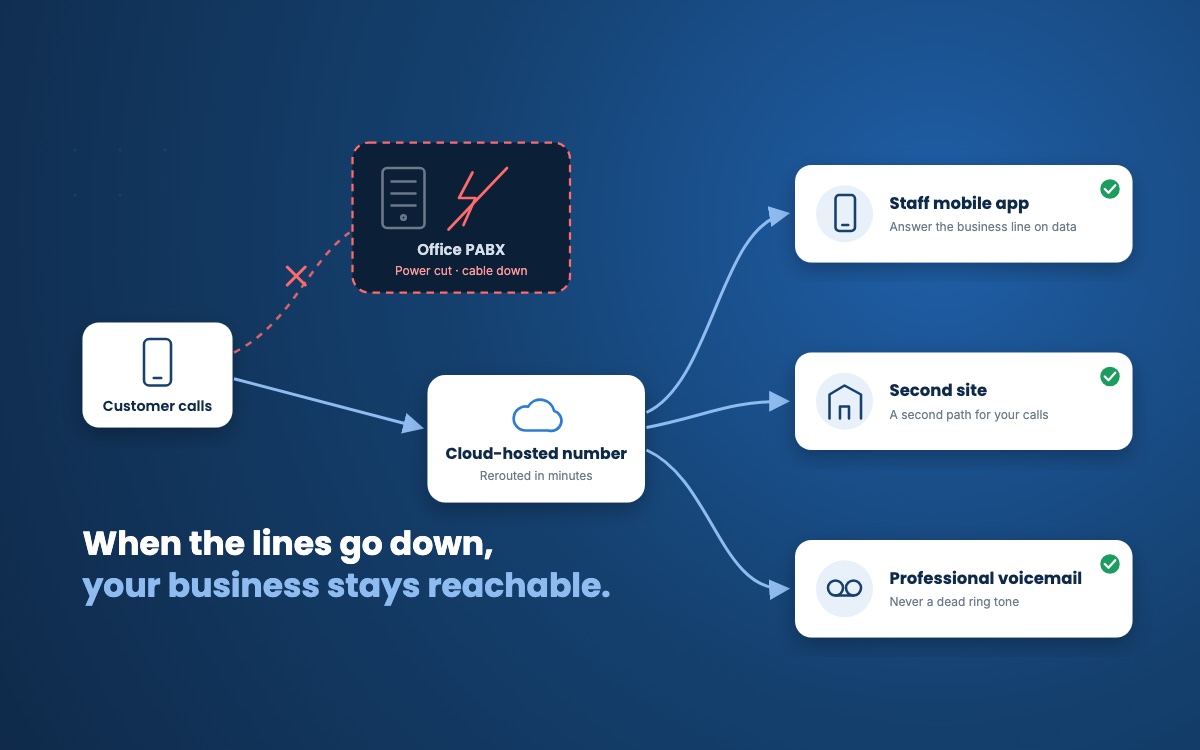
In practice, that comes down to a few concrete ideas. Redundant paths matter: having more than one way for a call to reach you, so a single cut cable or a single radio link going down for a day doesn't take your entire phone presence with it. Numbers that aren't tied to one box matter just as much — a cloud-hosted phone number can be rerouted in minutes to a mobile line, a different office, or a different staff member entirely, whereas a number wired permanently into one PABX in one building has nowhere else to go when that building loses power.
Mobile app extensions act as a genuine safety net here: if your main office system is down but staff can still answer the business line from an app on their own phone over mobile data, customers never notice there was a problem at all. And even the simplest fallback — a clear, professional voicemail message or an auto-reply explaining you're experiencing a temporary issue and will call back — beats a dead ring tone that leaves a customer assuming you've shut down entirely.
Practical steps that don't require a big budget
Building continuity into your phone setup doesn't have to mean an expensive overhaul done all at once. A few modest, deliberate steps go a long way:
- Ask your current provider the honest question. What happens to your calls during a power cut or internet outage today? Many business owners have never actually asked this question and are surprised by the honest answer.
- Keep a backup means of being reached. Even if it's as basic as a staff member's mobile number that other team members know to redirect to during an outage.
- Test your call forwarding. If you're on a cloud-based system already, check whether call-forwarding to mobile is already configured, and test it occasionally rather than assuming it works.
- Think about a second path. If your business operates from a single location today, think about whether a second site, even a small one, would also mean a second path for calls to reach you — a question worth asking before growth forces the answer on you.
None of this requires replacing a system that's otherwise working well. It requires treating "what happens if the lines go down" as a real operational question rather than something to improvise in the moment.
Building this in from wherever you're starting
This is really the thread running through how we think about infrastructure at Vezeti. A business running a legacy analogue line or a PRI circuit today isn't behind — plenty of solid, reliable operations run exactly that way. But continuity planning looks different depending on where you're starting from, and it's worth having that conversation honestly: what redundancy already exists in your current setup, what a modest upgrade could add, and what a fuller move toward SIP trunking or cloud communications would make possible if and when you're ready for it. The goal isn't to rush anyone toward the most modern option available — it's to make sure that wherever you are on that spectrum, a bad day on the power grid or a cut cable doesn't have to mean a bad day for your customers.
This post is part of an ongoing weekly series on telecom technology and business growth for Nigerian businesses.
💬 Questions & Comments
Loading comments…
Leave a comment